News
Wednesday December 10th, 2025
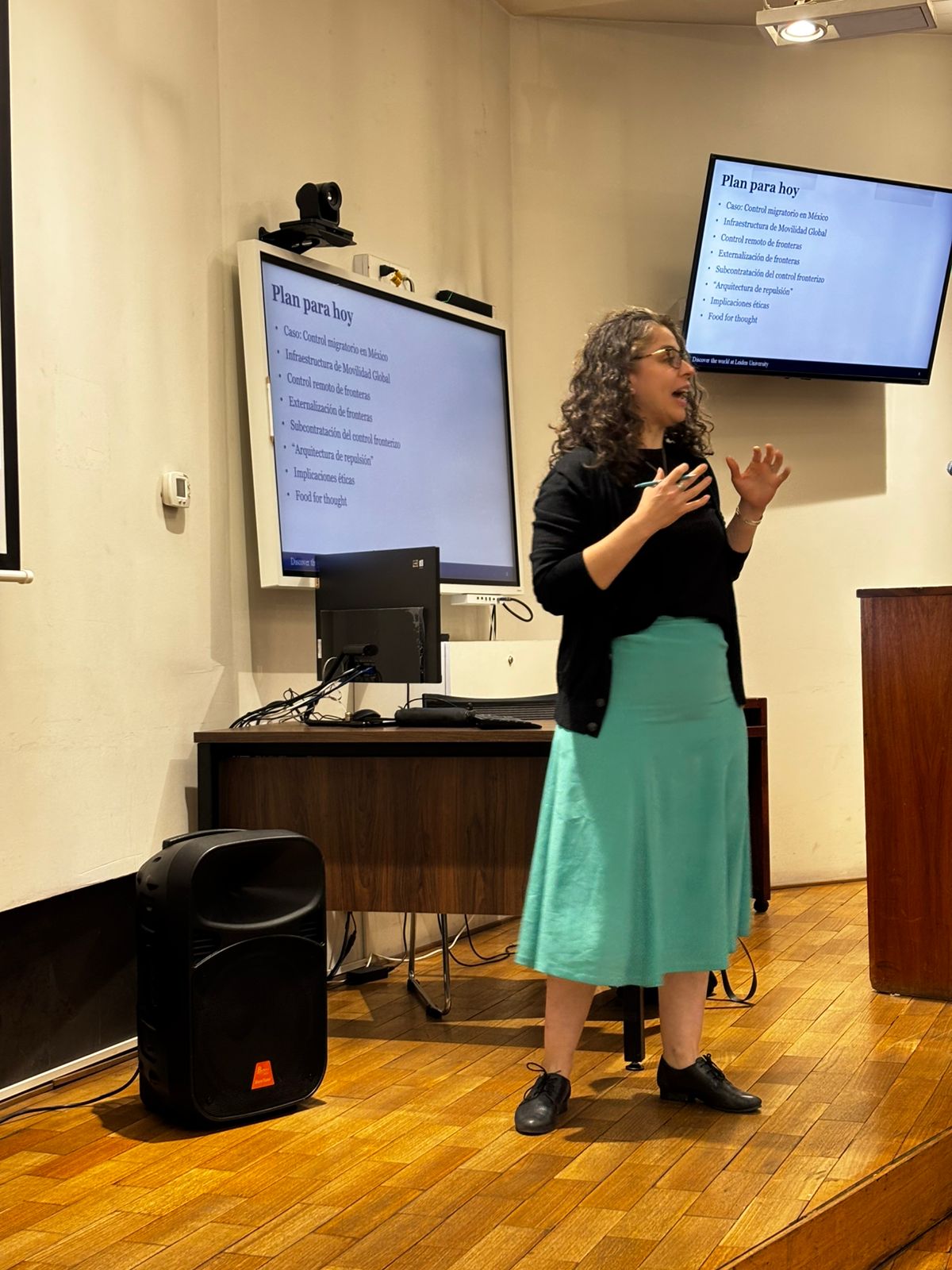
The expert on migration and mobility in the Americas presented the lecture “Border Externalization and Transit Control Regimes: A Look at the Mexican Case.”
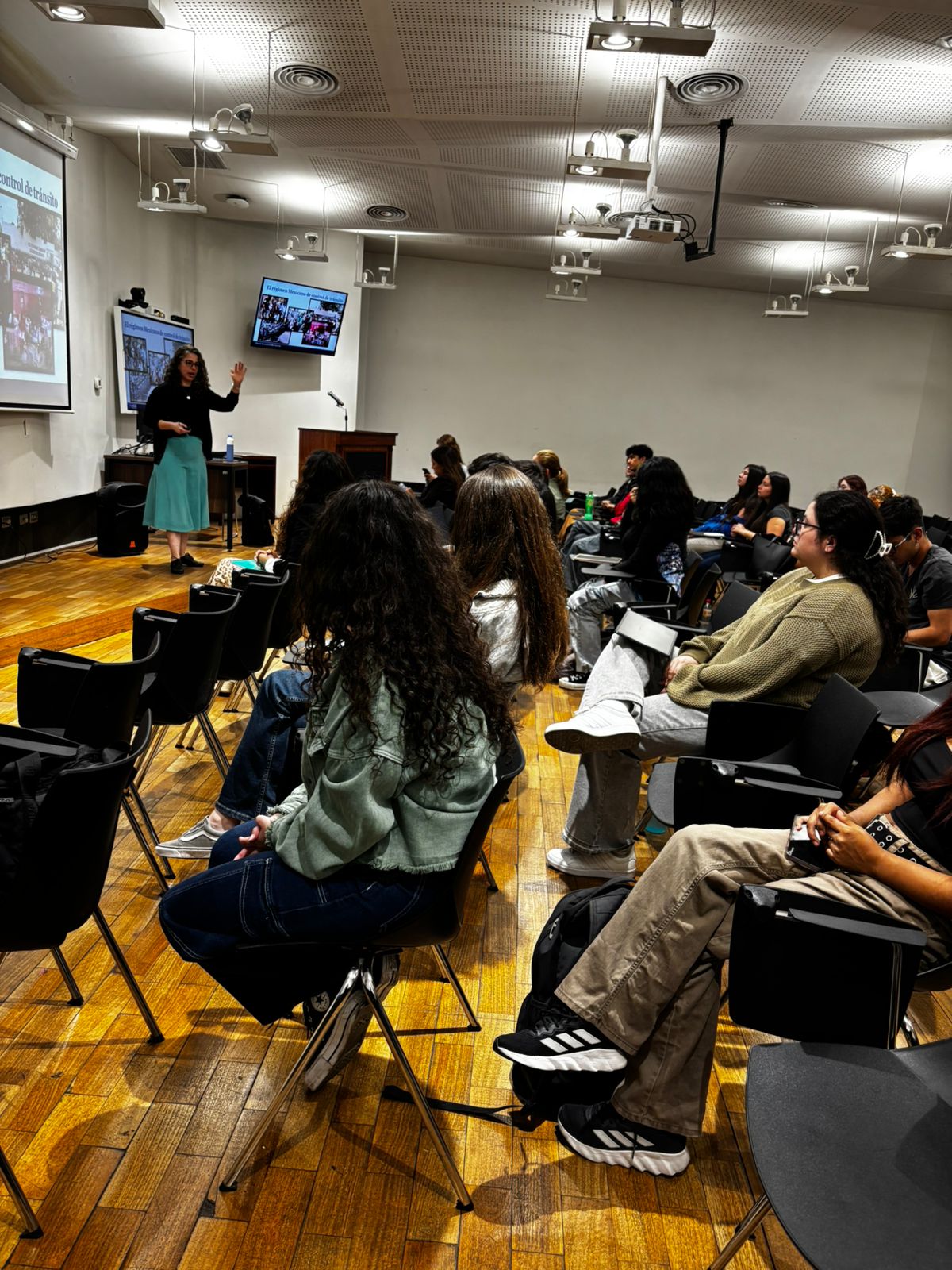
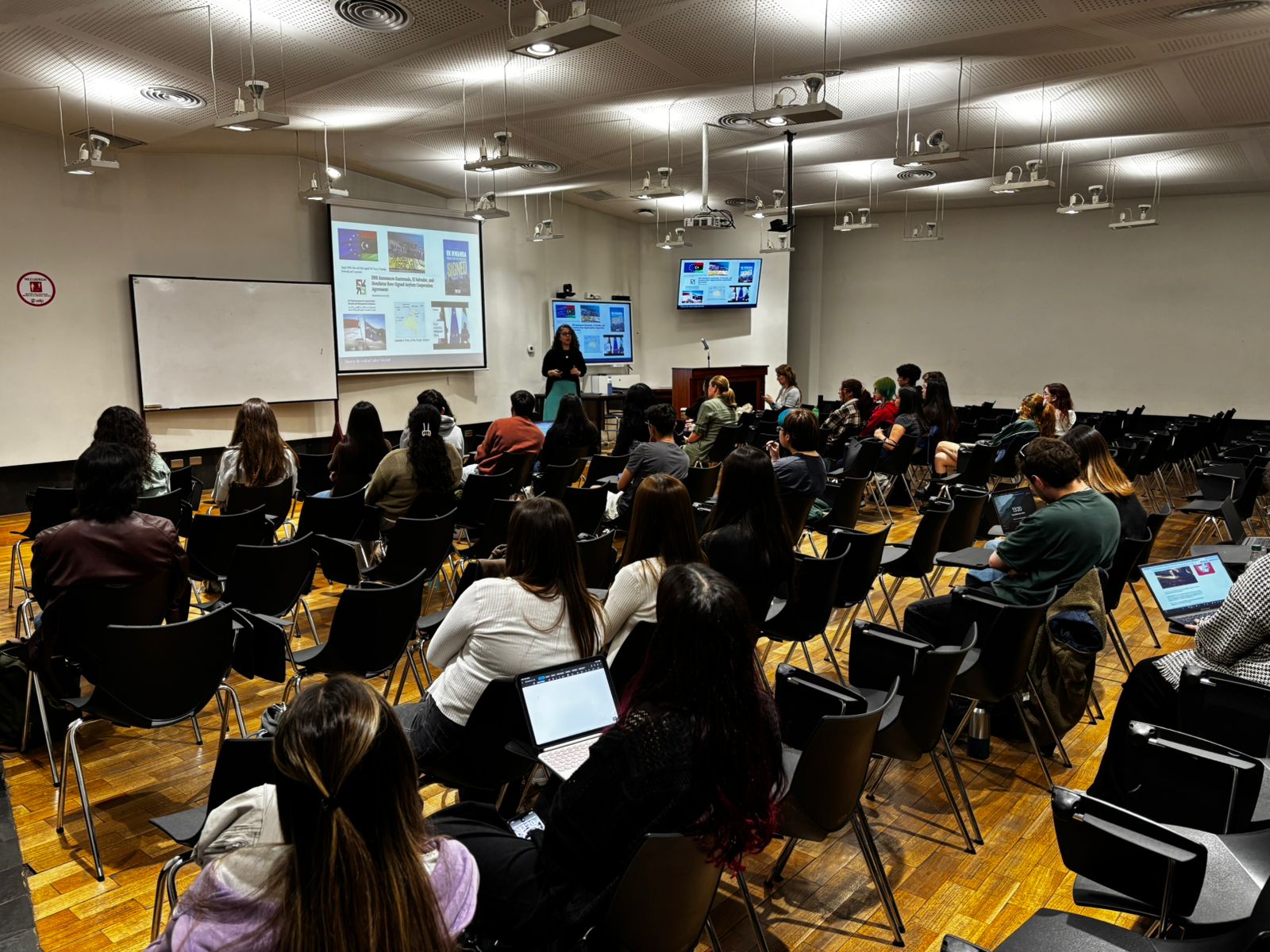
As part of the promotion and strengthening of global education, directors from the General Directorate of International Relations and the Directorate of General Studies coordinated the participation of Amalia Campos-Delgado, an academic from Leiden University and an expert in migration, for the final session of the Honors Diploma in Global Studies (DHGS).
On Wednesday, November 26, the Assistant Professor of Law and Society at the Van Vollenhoven Institute (Leiden University) delivered the keynote lecture: “Border Externalization and Transit Control Regimes: A Look at the Mexican Case.”
Combining perspectives from political sociology, international relations, and criminology, Dr. Campos-Delgado revealed the infrastructure of global mobility. Using the case of migration control in Mexico—her home country—as a reference point, she introduced a series of key concepts that she argues are replicated across multiple borders, particularly those characterized by precariousness and a lack of state presence.
Remote border control, externalization, the outsourcing of border enforcement, and the “architecture of repulsion” were presented as the backbone of the political management of migration, marked by power asymmetries between nations.
The scholar paid special attention to the ethical implications of the global mobility infrastructure, which is currently sustained by restrictions and discrimination based on nationality, race, and class.
“Restrictive migration policies do not deter migration. They make it harder, more expensive, and more violent. If migration control becomes more restrictive, more people will have to resort to the irregular crossing industry because there are no other ways out,” she highlighted.
At this point, she asserted that through these policies, “the externalizing State finances and authorizes human rights violations and evades responsibility.”
From this context, she explained, arises what has been termed the “Criminal Model of Migration”—the application of crime control logic within migration contexts. This construction, she deepened, positions the “migrant as an enemy,” dehumanizing them and creating moral and political distancing.
This culture, she pointed out, ultimately leads to the breakdown of empathy. “What criminalization does is that, even when a person is right next to you, you cannot make a human connection because they are constructed as a ‘criminal other’.”
The Leiden University academic urged the audience to understand that mobility categories are constructed historically and geographically, prompting the question: “Who profits from restrictive migration?”
Before concluding, Dr. Campos-Delgado encouraged students to question everything, keeping in mind that “migrants are a political tool. They have been so in multiple spaces and contexts—in Europe, Africa, and the Americas.”
Compartir esta página: